So where is the original “Gen Z boss and a mini” viral trend video widely shared through TikTok and Instagram?
Well, trawling through the “the breakout hack” or tbh skincare (#tbhskincare and @tbhskincare_) posts from July 2014 they look to have been removed.
All that remains on Insta and Tiktok are the response videos to their original viral video:
https://vm.tiktok.com/ZNdCatNSB/
The original video was scraped and is still widely available e.g. via this X post
And on YouTube here
Why was the original video removed? We can only guess. Maybe it was considered politically incorrect and/or not something the brand wanted to continue to be associated with. Feel free to leave a comment if you know for sure.
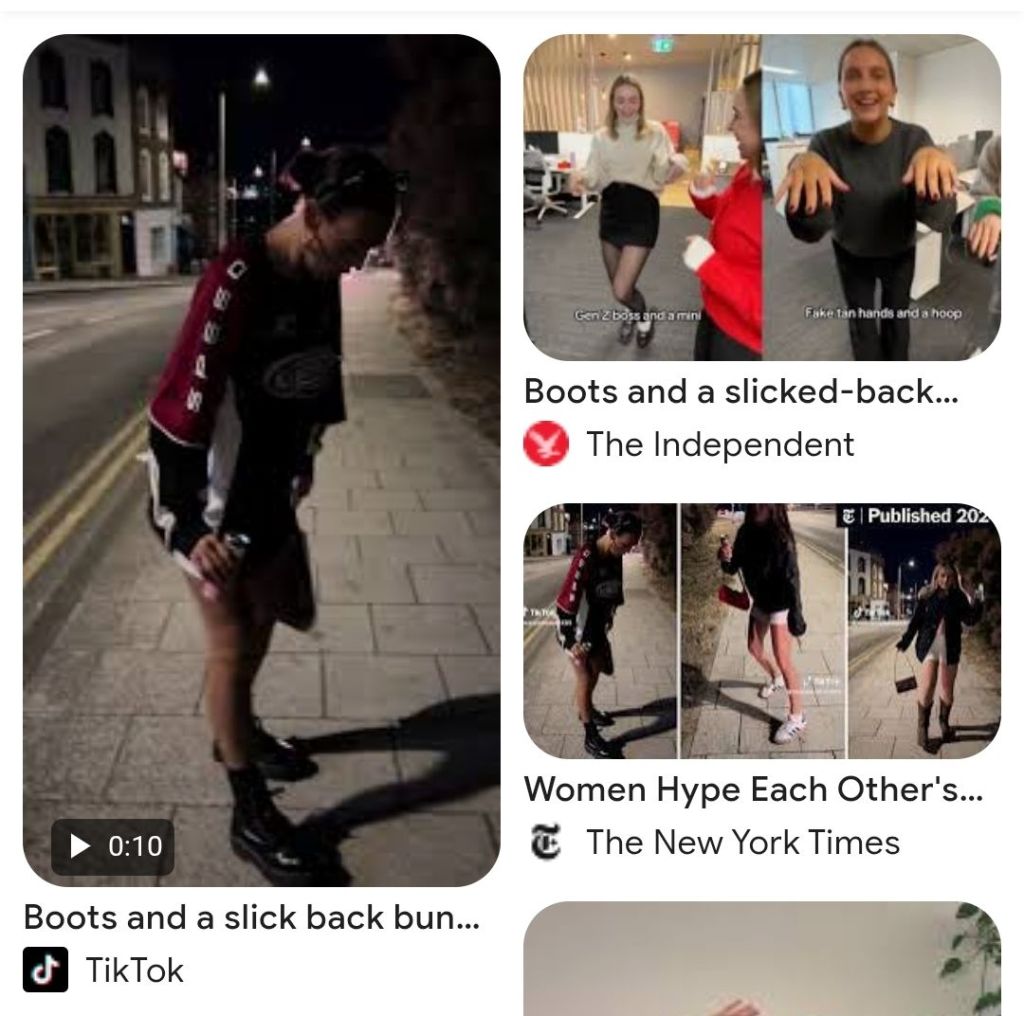
The trend was itself started by another trend video, “Boots and a slick back bun” or “Boots and a slicked-back bun”, the original of which remains on Tiktok
https://vm.tiktok.com/ZNdCa7Um1/
These articles contains screenshots and explain the background to that video.
https://www.independent.co.uk/life-style/boots-slick-back-bun-tiktok-trend-b2583952.html
Why was the original video so popular? Perhaps the fashion style archetypes described resonated. Certainly, the outfits are commonly seen in London and have become almost a kind of standard uniform for young British girls.
The “lyrics” have become a shorthand to describe a look using a concise and catchy 5-beat formula that can be syncopated.
“Boots and a slicked-back bun” duh duh-duh duh duh duh
“Cowboy boots and a blowy” duh duh duh duh-duh duh-duh
“Sambas and a little red bag”duh-duh duh-duh duh-duh duh duh
The New Zealand skin care brand took the concept and extended it from the sartorial to physical and other attributes.
“Gen Z boss and a mini”
“Itty-bitty titties and a bob”
“Five foot three and a attitude”
“Secret product and a trench [coat]”
“New Frank Green and a sneaky link”
“Fake tan hands and a hoop”
Writers often use character descriptions to create an image of who a person is in the reader’s mind.
Readers/viewers often recognise such characters from their own lives, perhaps because society and families create people whose bundle of traits is so similar they could have emerged from a cookie-cutter or jelly mould.
These viral videos condense such character descriptions in an ultra concise and catchy way, making them easy to understand and process.
Of course everyone is an individual but stereotyping is something all of us do to characterise the information around us into more easily understandable chunks. Stereotyping doesn’t just apply to people but is particularly useful in any domain where there is complexity.
This technique of employing two or three key descriptors for characters is also hugely useful for writers to ensure the characters that gradually take shape in their minds become coherent and then remain consistent.
There are of course other aspects to these videos which might explain why they went viral, including the political, economic, social, legal, technological, and environmental aspects.
Clearly, from the comments at the time, a flavour of which is in the ironic reaction video subsequently released, it ‘triggered’ a lot of people and both the original content and unfiltered honest reactions to it may have connected with viewers and made them feel less isolated in their own life experiences.
 GI Chow